asdasdasd





Furnish the classroom
Furnish the classroom for an enriching learning environment
The ability to create innovative, dynamic, and enriching learning environments is a large part of the modern, future school. How we furnish a classroom affects how students experience and perceive the room, but it also affects social behavior. Currently, there is a lot of research and studies underway regarding how the environment around us affects our brain health. How we read and encode places has been important for our survival throughout history. Generally speaking, we thrive best in environments that challenge our brains in moderation.
Below are a few examples of how to arrange the furniture, along with tips and suggestions that might work for your specific classroom. It is the teacher who knows their classroom best, and of course, factors such as the number of students, classroom size, and students’ ages must be taken into account. It is important that students are involved and gain an understanding of why and how they should stand or sit at the StandUp DESK student desks for optimal ergonomics. One study demonstrated that the classroom environment can affect students’ performance on standardized tests by up to 15%. By carefully considering how to arrange the furniture in a classroom, several positive effects can be achieved.
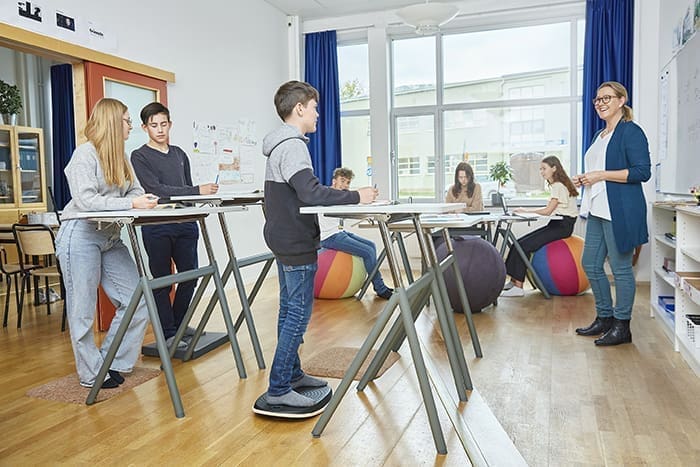
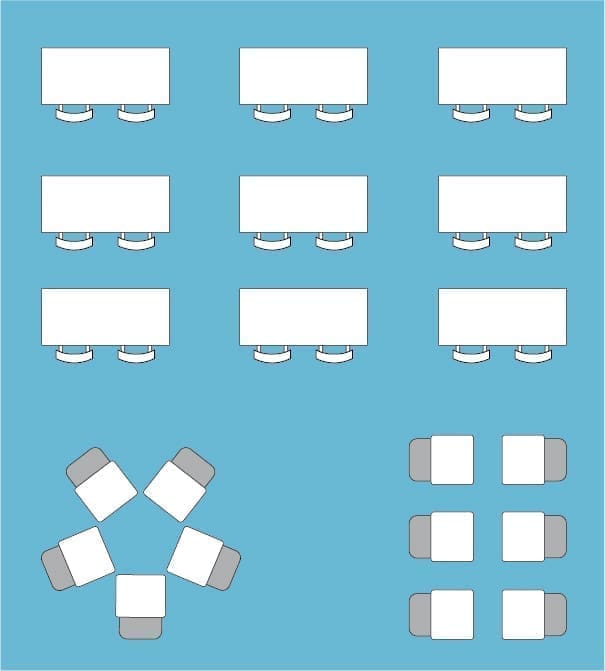
Depending on the effects you want to achieve with your furnishing, you can place the tables in different ways. When placing our standing tables in small groups, it promotes social interaction, while tables placed along a wall reduce the number of conversations. Since the tables are easy to move around, this gives users the opportunity to adapt the furnishings according to the content, goals, and purpose of the lesson.
U-shaped
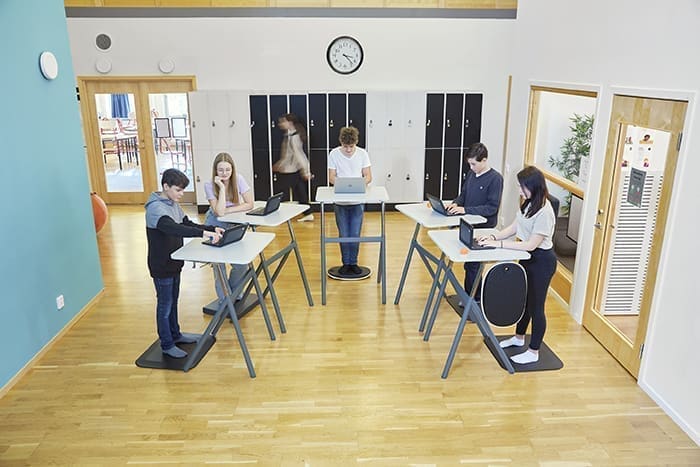
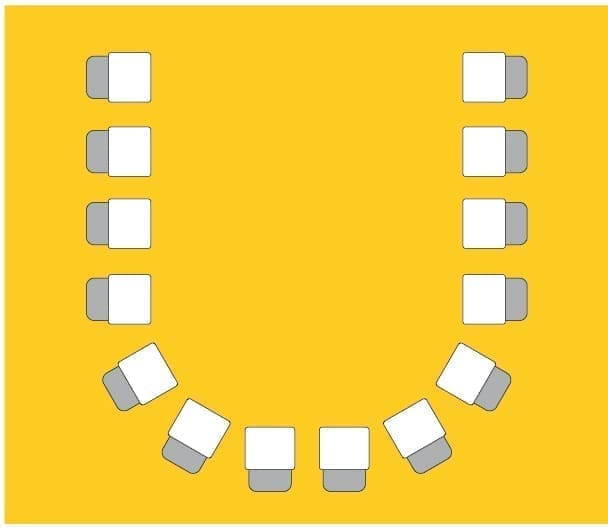
A U-shaped seating arrangement increases student participation. It leads to more discussion, more questions being asked, and increased student engagement. This happens between student and student, as well as between student and teacher. In this arrangement, increased eye contact can also be observed. This is very positive when someone is about to speak, tell something, or present. The U-shaped arrangement is well-suited for a classroom where there is unrest among students. In this arrangement, it is easy for the teacher to maintain contact with all students and simultaneously address the needs of those requiring extra attention. It is also a good placement for starting and ending lessons at the same time. As a good complement, screens are available for focused work and the option to alternate between standing and sitting becomes a natural part of the work.
Radar
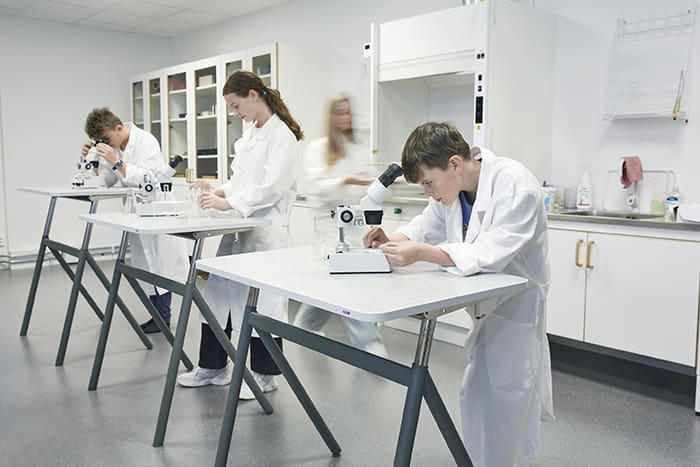
When placing standing desks in rows, students are encouraged to work more independently. In this arrangement, it is usually easier to increase the distance between the desks, which can be helpful when a high degree of directed concentration and focus is required. Similarly, the distance between the desks can facilitate reading each other's facial expressions, gestures, or expressions. This can help a student who has difficulty reading emotional expressions, and so on. A distance of approximately one meter is usually appropriate for easily reading each other. This way, we avoid moving and darting our eyes to get a complete picture. Because there is a distance between them, the surroundings are not affected, and the student chooses whether to sit or stand. This arrangement is suitable for, among other things, lectures, presentations, independent work, and more.

Activity-based
In classrooms where the learning environment is designed with an activity-based approach, tables serve a very useful function. It is often best to place these tables in a corner. In some cases, the other tables in the classroom might be regular desks/tables. In the corner, students can then take turns using the standing desks as an alternative to natural movement. This placement is well-suited for individual work, such as work schedules. Research shows that after 30 minutes of sitting still, the brain enters a state of rest. The body signals that it's time for a break and recovery, and our concentration decreases. By standing up at regular intervals, you release new energy, which increases concentration again. When working at StandUp desks, it is very important to talk to students about how their bodies feel when standing versus sitting. Explain why we need to move and what happens in our brains and bodies when we stand up. By creating this awareness in students, we increase their confidence in their own abilities and their ability to influence their own learning and well-being.
Group
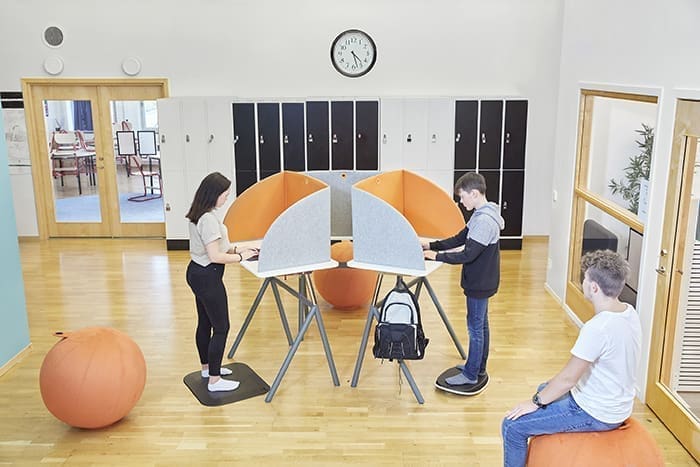
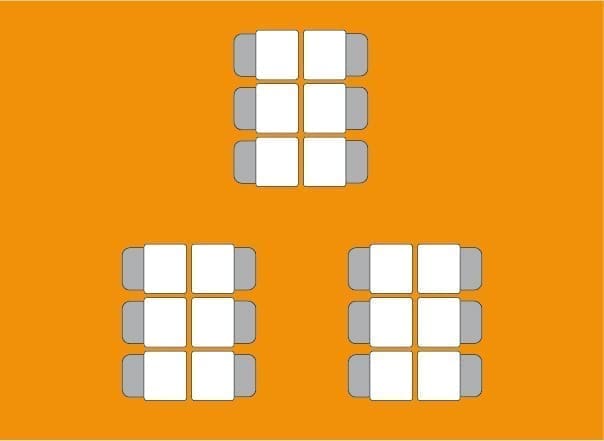
During group work and workshops, the height-adjustable tables are placed in groups. They facilitate collaboration, increase participation, and create good conditions for learning together. When we actively work on building good relationships in a positive learning environment, our brains relax and get some recovery, which results in us becoming more creative and finding it easier to solve problems. This setup is an excellent furnishing when students are to review material with each other and explain their thinking. It becomes a natural place for oral expression and provides good practice in standing and speaking in front of a small group.
In our proposals, we have learned from the schools that have already furnished with Matting Interiors student desks, and we have also received help from Brain-enriched uh Linda Bellvik Linda works with entrepreneurial learning that stimulates curiosity and self-confidence, and is an expert in creating work environments and climates where the brain thrives best. For several years, Linda has built effective learning environments in schools and developed various environments in workplaces around Sweden – always with our most important raw material as the foundation: the brain.